It is much easier to do research nowadays because of easily accessible online resources. Below is a list of sites I would always refer to when doing research on East Asian numismatics:
Zeno.ru. This is the most influential oriental coins database. Thousands of professional numismatists and collectors are contributing uncountable coin images, numismatics literature, auction records and any other resources related to oriental numismatics to this database. It is always a good start to take a look on this site when doing any oriental numismatics research.
Monety Keszowe blog by Polish Bartosz Zarębski. Although the name of blog is Monety Keszowe (Chinese coins), Mr. Bartosz Zarębski pays a lot of attention on ancient East Asian cash coins. Zarębski always update recent research in this broad field, and it is always a good choice to catch up the research progress by looking at his blog.
「東南亞」是一個十九世紀晚期才創造的詞彙。這個詞彙首見於德國人的著述,隨著太平洋戰爭時盟軍成立東南亞司令部而得到廣泛使用。西方傳教士雖然早在十六世紀便留下豐富的記述,但把東南亞作為一個整體來研究是非常晚的事情。西方對東南亞歷史的早期研究,有代表性的包括Robert Heine-Geldern在1942年撰寫的Conceptions of State and Kingship in Southeast Asia及George Cœdès在1948年撰寫的Les états hindouisés d’Indochine et d’Indonésie,嘗試尋找位處「東南亞」的政治體在文化上的共通點。Cœdès的影響尤深,他曾任秦國國家圖書館的館長,又參與吳哥遺址的考古,對東南亞碑文有著極為深刻的了解。憑藉這些經驗,他在Les états hindouisés d’Indochine et d’Indonésie探討了十六世紀以前東南亞國家的印度化現象。這是一本任何後來東南亞研究者無法繞過的里程碑,八十年代中國學界關注中南半島局勢時翻譯,2008年以《東南亞的印度化國家》之名公開出版。
Anthony Reid早年研究印尼現代史,包括1986年出版的The Indonesian National Revolution, 1945–1950。然而,他最著名的著作是研究東南亞整體的《東南亞的貿易時代》。儘管他本行是印尼研究,但他招收的學生並沒有局限於此,包括研究越南阮主時期社會經濟的李塔娜,這為《東南亞的貿易時代》的撰寫提供很大幫助。此書分為兩卷出版,第一卷〈風下之地〉於1988年出版,第二卷〈興盛與危機〉於1993年出版。 第一卷〈風下之地〉透過大量外人遊記描繪「荷蘭確立東南亞商業霸權之前兩個世紀裡」東南亞人的日常生活及社會組織,體現出一種獨特的存在方式。第二章<自然福祉>引用大量遊記描繪了健康的生活:「與我們歐洲終日陰沉沉的天氣相比,這裡氣候温和適宜,非常有益於健康,簡直就是天堂」、「也許僅法國一個省的瞎子和瘸子就有暹羅全國那麼多」(卷1,頁54~5)。作者根據手頭上的資料得出一個意味深長的結論:「300年前東南亞人的情形非但不比20世紀初這些現代數字所揭示的壯況差,而且還要好得多」。第四章<社會組織>開頭引用了1569年的一則紀錄,開宗名義地表現了作者心目中貿易時代東南亞人身依附寬鬆的社會形態:「這些島民們不受制於任何法律、國王或首領……那些奴隸眾多和勇猛強悍的人可以為所欲為……他們不承認任何首領或統治;即使是他們的奴隸們也不大受制於主人,而只是在一定條件下才為他們服務」。這一章還探討了南島語系女性君主執政的狀況。第五章有相當重要的一節<讀寫能力的普及?>,根據西方早期觀察,指出貿易時代東南亞的識字率極高,尤其婦女普遍有著高超的文化的水平,但讀字率在後來反而下降:「那只能是因為隨著伊斯蘭教和基督教的傳入,更為現代和普及的寺院教育制度壓制了那種更為古代、形式迴異的讀寫能力」(卷1,頁237)。總的來說,第一卷表現了一種迴異普世宗教(基督教、伊斯蘭教、佛教、儒教)的生活方式、一個沒有人身拘束、健康、男女平等的桃花源。
James C. Scott的成長很傳奇。他在緬甸讀書,其間受聘於中情局寫報導,1961年到耶魯大學研修政治學。他在越戰時得到教職,在這個風雲變幻的時代教授的內容涵蓋了戰爭和農民起義。2009年,做過緬甸、越南和馬來西亞的研究,他出版了一本野心更宏大的鉅著《逃避統治的藝術:東南亞高地無政府主義的歷史》。作為收錄於耶魯大學《農業研究叢書》的著作,這本比起《東南亞的貿易時代》更接近政治學研究而非歷史研究。作者在前言簡潔明快地交待了他的意圖:
Anthony Reid和James C. Scott都是在西方出生。然而,除了土生土長的西方人,也有少數的東南亞人在西方學術界做出非常重要的成就,而Thongchai Winichakul是其中最享負盛名的一位。Thongchai是泰國華裔,年輕時是學生領袖。1973年,民眾一度逼使右翼政府退讓,但局勢後來一轉直下,1976年10月6日軍方在法政大學斷然清洗,包括Thongchai在內的十九名學生入獄。他在兩年後出獄,在悉尼大學得到碩博士學位。1991年,他在University of Wisconsin得到副教授職位,1994年出版了鉅著《圖繪暹羅:一部國家地緣機體的歷史》。這本著作在西方得到極大迴響,許耀峰做了調查,在星加坡的Journal of Social Issues in Southeast Asia列出了東南亞研究最有影響力的著作,《圖繪暹羅》是其中少數亞裔完成的作品。《圖繪暹羅》嘗試挑戰皇家民族主義敍事,他以後的著作,包括今年三月出版的Moments of Silence: The Unforgetting of the October 6, 1976, Massacre in Bangkok,都是圍繞這個主題。
除了空間,同樣重要的是時間。2014年,Thongchai發表了論文Modern Historiography in Southeast Asia: The Case of Thailand’s Royal‐Nationalist History,可看作《圖繪暹羅》第八章討論的延伸,王立秋把這篇文章翻譯成了中文<東南亞的現代史學:泰國皇室民族主義史學的例子>。暹羅古代的歷史主要側重道德規訓,而在1893年暹法戰爭的慘敗後,皇室需要一種新的歷史書寫塑造國民的國家感。皇室民族主義史學有兩個目的:1、暹羅有古老偉大的歷史。1930年代發現了蘭甘亨銘文,暹羅史學依據此銘文重構暹羅第一個王朝素可泰的光輝歷史。然而,有關素可泰的歷史研究非常依賴蘭甘亨銘文,而這份銘文的真實性在1987年後逐漸受到質疑。這動搖了皇室民族主義史學的根本,因此被視為危害國家安全的問題。2、暹羅的歷史是一部反殖民史。古代的宗教敘事文體Phongsawadan被現代史學挪用,王統記不再是敘事主軸,歷史變成和抗緬戰爭的序列。這種敍事變成一種範式,以致部分史學家還發展了和中國鬥爭而取得獨立的敍事。Thongchai認為,與其說這些書寫是歷史,倒不如說1893年慘敗的創傷感。這種創傷感形塑了他們回望過去的格式。
這個現象並非獨限於社會主義陣營。作為社會主義陣營的對立面,右翼政權也遠非「自由世界」這個詞彙可以概括。我想用張如磉這個人物的經歷談談。磉是一個越南左派,在南北分裂時參與了越共扶持的越南南方民族解放陣線。然而,他失望於河內的高壓統治,遂叛逃到法國並撰有回憶錄《與河內分道揚鑣》,89年出版中譯本。他在此書回顧了和胡志明的第二次對話。胡志明談論反抗法國殖民統治的必要性時沒一詞談到馬克思,而是談到陳興道、黎利、阮廌、光中(頁17)。他們的主要事跡是摧毀元明清的侵略軍。間諜王范玉草的評論尤其有意思:「我響應號召。雖然我對馬克思或列寧一點也不了解,但是我對胡志明是了解的」(頁44)。胡志明如此,吳廷琰亦是如此。琰是反抗越共的強人,暗殺後越共中央政治局評價他是美帝最能幹的「傀儡」之一。在1957年訪美時,他被稱呼為「自由世界的領袖」(leader of the free world)。然而,近來的研究愈發察覺到他民族主義的一面,代表作包括Edward Garvey Miller的Misalliance : Ngo Dinh Diem, the United States, and the Fate of South Vietnam。張如磉仇恨吳廷琰,但也沒有完全否定琰的民族主義,在回憶錄作出了精闢的描述:「美國的意向及其政策的意圖已經昭然若揭,但是吳庭琰卻叫人捉摸不透。外國企圖操縱越南簡直不是什麼新鮮玩意兒,但是操縱往往是雙向的。在這方面典型的例子就是胡志明本人。他利用中國和蘇聯的支援來實現自己的目標,但是他並沒有因此而放棄自己的民族主義形象。與此相類似,美國的目標是一回事,但是到現在為止,還無法說明吳庭琰在多大程度上想利用美國人來幫助他建立一個有活力的南越政府,也無法判斷他與美國人在越南問題上的看法能一致到什麼程度」(頁35)。
在這一節,我想談論「自由世界」旗號下的民族主義,而利用Benedict Anderson的經歷作線索。Anderson的一生和東南亞有著緊密聯繫,他很多思考都是立足於東南亞的政情。例如,《想像的共同體》討論第三世界的民族主義時,印尼這片土地上發生的現象便被當作代表引用。他的經歷非常沉重,從中可知除了赤柬,東南亞還存在著很多殺戮場(killing fields)。當Anthony Reid、James C. Scott和Thongchai Winichakul下筆時,他們大概也念想著這些殺戮場。
Boelan 9 Tahoen 2604. Bangsa Indonesia Melangkah Kearah Kemerdekaan
2604是皇紀紀年,等同於西曆(格里曆)1944。皇紀是明治維新後不久為了彰顯日本歷史緣源流長勝過基督教世界而發明的紀年,這在終戰後被視為皇國史觀的產物,使用受到GHQ限制。這段影片展示了很多群眾同時揮舞印尼國旗和日本國旗的畫面。日本人選擇這些象徵作宣傳強化了她們在印尼人心中的地位。甚至,蘇加諾在1945年8月17日所作的獨立宣言以皇紀紀錄時間(hari 17 boelan 8 tahoen 05),只是在1948年10月外交部出版英譯才改回西曆(17 August 1945),而宣布獨立的地點是在前田精的官邸。
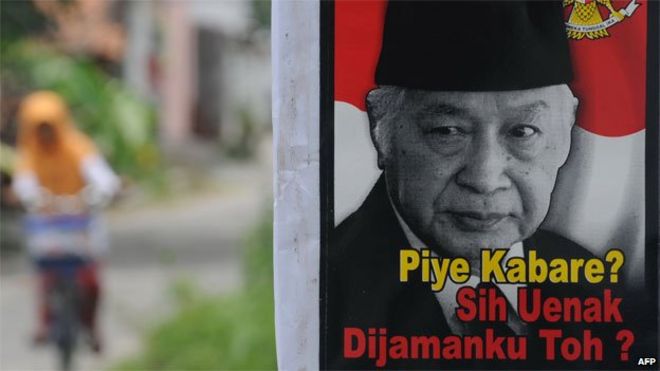
Anderson沒有提及的是,蘇加諾在1959年的演說否定了前田精對印尼獨立的貢獻,還坦言他希望遺忘自己與日本合作的經歷。民族主義的正統性莫過於獨立自主,蘇加諾的態度,假如以Anderson描述「越南」國號源自中國皇帝輕蔑發明的說法,大概是「民族必須要『遺忘很多東西(oublié bien des choses)』」(頁224)。「獨立之父」蘇加諾,「發展之父」蘇哈托亦是如此。1975年兼併東帝汶是印尼獨立後最大型的軍事行動,無論行動開始還是最猛烈的階段,都和美國有密切關係。基辛格的默許是這次行動開展的重要原因,而行動中所使用的大量武器,包括OV10「野馬」攻擊機,都是美國支援的(《比較的幽靈》,頁169~78)。然而,蘇哈托在1989年出版的回憶錄卻是以去殖民化談論這個軍事行動,甚至刻意多着墨與美國的衝突(頁237~42)。「我們自身」便透過選擇性敘述凸顯了出來。
正如Thongchai在前文所說,在民族主義中和「我們自身」同樣重要是「他者」,Joshua Oppenheimer所搜集的材料提供了重要見證。Oppenheimer執導的兩部紀錄片The Act of Killing和The Look of Silence在2012年和2014年分別上映,主題是九三〇事件的記憶。
Anderson曾經出版Cornell Paper(現在看來,Cornell Paper希望為PKI開脫,因此低估了PKI的參與。總的來說,現在最值得參考是John Roosa的Pretext for Mass Murder: The September 30th Movement and Suharto’s Coup D’Etat in Indonesia),認為蘇哈諾和印尼共事先不知情而是事件的受害者,北京也沒有在幕後策劃,公開後Anderson旋即被驅逐出境。為什麼蘇哈托這麼敏感?因為這挑戰了蘇哈托政權對「他者」的描繪。
The Act of Killing主要圍繞著Anwar Congo,他是當年參與集體殺戮的施害者。Oppenheimer採訪Anwar時一開始沒有明言他的目的,Anwar以為這次採訪是為了他青春時期的英雄事迹,還津津樂道他屠殺的經歷,希望導演能夠包裝成「英雄片」再拿去荷利活上映。我認為尤其重要是39:50後和Adi Zulkardy一起的片段。Adi是和Anwar合作的殺人者,Anwar邀請他一起拍這部「英雄片」。Anwar是一個思想比較單純的人,他深夜偶爾會擔心他手下的冤魂。Adi是一個冰冷冷的唯物主義者,安慰Anwar受害者死前尚且被打倒,死後只剩下靈魂更是不足畏懼。總的來說,他們描述殺人事迹時是以輕快的心態回憶。
這是Anwar和Adi經過的一條橋,他們曾經在此把印尼共的屍體拋棄。這是Adi的回憶,他在1966年參與了「摧毀華人」運動。他女朋友是華人,他在殺死了若干華人後遇到女友父親,毫不猶疑下手並津津樂道:He fell into a ditch. I hit him with a brick. He sank.
Anwar: For me, that film is the one thing that makes me feel no guilty. I watch the film and feel assured.
Adi: It’s easy to make the communists look bad after we killed them. That film is designed to make them look evil. Communist women dancing naked… Of course it’s a lie! Killing is something you do fast! Dump the bodies and go home!
Anwar沉默良久,總結到:We shouldn’t say bad things about that film to outsiders.
Pengkhianatan G30S/PKI把印尼共非人化,片中他們的行為極為殘酷野蠻。Adi本身是一個殺人老手,意識到印尼共殺死將軍後讓裸女圍著火堆跳舞是荒謬絕倫。這部宣傳片可以消滅共情,讓Anwar “feel no guilty”,因為「我們」和「他們」不一樣,「我們」刀下的「他們」不是人。這部宣傳片影響深遠,是印尼的國民電影。Anwar提到「The government made this film so people would hate the communists. From elementary school on all children had to watch this film. Every year, they had to come to the cinema to watch this.」對印尼共的仇恨便如此進入了印尼國民的記憶。
「他者」除了印尼共,還有北京。印尼軍方指控北京策劃九三〇事件,並炮製了報紙以作宣傳。根據周陶沫使用北京外交部檔案的研究China and the Thirtieth of September,北京在這次事件的參與極為有限,剛收到九三〇事件情報是出乎北京意料之外的。但是,這不妨礙印尼軍方指控北京這個外部勢力參與。民眾的憤怒延伸成對華人的攻擊。Anwar和Adi下手的無罪感,便是軍方宣傳凸顯「我們」和敵人不一樣的結果。蘇哈托所建立並運作三十二年的新秩序是建立在對「他者」的集體殺戮之上,集體殺戮是國家動員的工具。John Roosa在The State of Knowledge about an Open Secret: Indonesia’s Mass Disappearance of 1965~66認為,集體殺戮的模式在印尼各地存在驚人的一致性,弗洛勒斯(Flores)的殺戮案例很可能是當地向蘇哈托表達忠誠的工具。「他者」如此促進了愛國情緒。
在2.3節《圖繪暹羅》的部分,我談到了暹羅如何參考西方逐步透過重新想像空間和時間以建構民族主義。其實,暹羅國家意志最重要的「泰國」和「皇室」,也是非常晚近的發明。「暹羅」在1939年才改國號為「泰國」,而這和日本的政策密切相關,葛兆光在<當「暹羅」改名「泰國」 :從1939年的往事說到歷史學與民族主義>談到了中國知識分子的反應,我引用文章中轉述顧頡剛的部分:「為什麼顧頡剛說是『搶奪我們的國土』?他說,因為他們這一民族即『泰(Thai)』,英文為“Shan”,中文和日文中有『撣』,《後漢書》有『撣國』,這個國家原本在緬甸(在今緬甸撣邦),但日本學者懷著『獨霸東亞』的野心『杜造歷史』,說自古撣國等就是一族,他們都是泰族。當時日本對東南亞包抄拉攏的局勢,讓中國學者特別注意到暹羅改名的日本陰影,也看到這種歷史敘述背後的政治意圖。因此他指出,暹羅的一些鼓吹『大泰族主義』的人,就宣稱包括中國的雲南、貴州和廣西的好些非漢民族,尤其是雲南西南的擺夷,都是泰族。由於暹羅把它當做自己的來源,並且在建立大泰族國家的口號下,宣稱『凡是泰族人都應當屬於這個國家,凡是泰族人以前諸國的土地都應當還給這個國家』」。國號受到外國政治風潮影響,這是現在的民族主義者寧願忘記的。皇室所受的尊崇亦是非常晚近的現象,以致認為Thongchai Winichakul認為這是在反左翼政治宣傳的產物。Thongchai在Thailand’s Hyper-Royalism提到,普密蓬在位之前皇權旁落,只是在普密蓬掌權後皇權才再次穩固。朱拉隆功於1873年廢除的匐匐跪拜禮在普密蓬治下重新恢復,暹羅有關皇室的節慶在1975年法政大學清洗後倍增。正如Thongchai譏諷,”The public sphere is royal; and so is the Thai calendar“。甚至,侮辱泰皇的寵物犬Thong Daeng會被控告大不敬罪。
People in different cultures are thinking in different context, and numismatic is not exceptional. Japanese coins have long grabbed the attention of worldwide collectors, and thus global auction houses and grading companies do not want to miss the opportunities in Japanese coin market. Spink has been holding auctions in Japan annually, and Professional Coin Grading Service (PCGS) site provides Japanese version. Japanese coins are highlights of many collections.
However, there are subtle differences between Japanese local and overseas coins market. The logic of local and overseas collectors can be different and this implies arbitrage opportunities. I want to demonstrate it by addressing the price difference between local and overseas market.
To collect data of local market, data sources include:
The Catalog of Japanese Coins and Bank Notes 2019 (日本貨幣カタログ 2019) published by Japanese Numismatic Dealer Association (日本貨幣商協同組合 )
The library of Auction World has gathered huge amount of transaction records from different Japanese auction houses. High-definition photos are attached but the description sometimes are not specific enough. Approximate grade (e.g. AU, UNC, …) despite of exact grade (e.g. AU58, MS63, …) are given even for graded coins.
To collect data of overseas market, data sources include:
PCGS has been updating the transaction records of eBay and Stack’s Bowers. It recently terminated the update of Heritage transaction records and never cooperates with Spink. In my opinion, the archive of Spink is not user-friendly.
The essay would pick four typical coins to capture the pattern of Japanese coin market.
1905 1 Yen
1944 10 Sen for Java (occupational coinage)
1952 5 Yen
1941 1 Sen
It has been a long debate about the superiority between PCGS and Numismatic Guaranty Corporation (NGC). The answer is subjective but it is a consensus that PCGS-graded coins of same grade are sold for a higher value in the market. I would compare only PCGS-graded coins in this article.
Between late 19th century and early 20th century, most countries shared similar standards in minting coins. A Great Britain Dollar (1895–1935) and a New Type 1 Yen (Silver) Small Size (1887–1914) weigh the same as 26.96 grams. Coins with denomination 1/100 of Pound/Yen/Dollar are minted in copper in both Japan and Hong Kong. Therefore, collectors focusing on this era are less likely to limit their collection in merely one nation. After 1930s, coin specifications of different countries start to vary. 1 Yen (Silver) coin is the symbol of Japanese empire decimal. Therefore, it is very popular among worldwide collectors, and 1905 is one of the years with largest existing circulation. Just start with local transaction records of 1905 1 Yen at library of Auction World.
Realized prices overseas are noticeably higher than that of local.
Realized Prices of SB (Stack’s Bowers), EB (eBay) and HA (Heritage)
The ceiling of local prices in both MS62 and MS63 do not exceed the floor of overseas prices. The price difference is the result of a stronger overseas demand.
Japan expanded its expire to Southeast Asia in Pacific War, and the opponents it defeated in the beginning included Netherlands. One of the propaganda Japan emphasized during the war was Pan-Asianism, and it viewed itself as liberating Asians from Western colonialism. This was the reason Japan minted the so called “puppet coins” for Java. The puppets on the reverse of these coins are named “Wayang Kulit”, a well-known Javanese tangible heritage. Sean Issacs wrote an article discussing the background of these “puppet coins”. Interestingly, “puppet coins” do not receive much attention in Japan as in the West.
Three 1944 10 Sen for Java graded by PCGS were sold in Auction World. One is AU55 and the remaining are MS62. AU55 10 Sen was sold at $245 (¥26,592) on 16 June 2017. MS62 were sold at $558 (¥62,048) and $524 (¥57,616) on 20 Jan 2018 and 19 Jan 2019 respectively.
If you would like to sell your “puppet coins”, Stack’s Bowers is obviously a better platform than Auction World.
You might wonder if Japanese coins are always sold at better prices overseas. Absolutely not! Overseas performance of scarce dates in reformed coinage (post-1945) are far from satisfactory.
According to the catalog published by JNDA, most valuable reformed coinage are 10 Yen minted between 1951–8 as well as 5 Yen minted in 1952 and 1957. However, few foreign investors are interested in Japanese modern coinage. There are no transaction records of 1951–8 10 Yen in PCGS database. A 1952 5 Yen MS65 was sold at $50 on March 2019 in Stack’s Bowers. In contrast, same coin in same grade was sold at $168 (¥18,836) on 15 July 2017 in Auction World. Mr. Watanabe marks his coin in MS66 as $215 (¥23,300). This is a reasonable price in local market but he can hardly sell the coin at such price in global auction houses.
Patterns above are more or less generic. You can do back-test with patterns derived above, say 1903 1 Yen or 1943 1 Sen for Java. However, some Japanese coins can be sold overseas at incredibly high prices without clear reasons. You can identify arbitrage opportunities only after transactions. My friend who is a Hongkonger has been an experienced dealer for over two decades. He sold few PCGS-graded 1941 1 Sen in eBay recently. Due to the enormous mintage (1,016,620,734), the coins worth a few in Japan. The catalog states that 1941 1 Sen in brilliant uncirculated condition only value 2 bucks (¥200). However, when my friend sold them in eBay, the realized prices were beyond his expectation.
The results would be more remarkable when you compare the results with the 1952 5 Yen sold in Stack’s Bowers. I guess overseas dealers are willing to pay so much because of the minted year 1941. My friend sold 1941 and 1942 1 Sen together and he did not expect a difference in realized prices between the two minted years. The catalog states the twos in BU condition at exactly same value as ¥200. However, the realized prices of 1942 1 Sen is not so impressive as its counterpart.
Western collectors might be willing to pay a premium for a coin minted in the year Japan declared war on the Allies with Mountain Fuji on the obverse. Japanese dealers would easily overlook such commemorative value in the eyes of the West before transactions take place.
The first rule of microeconomics is transaction price depends on supply and demand. In the age of globalization, the supply of Japanese coins is uniform all over the world. Therefore, price difference would only be driven by the difference in demand. Worldwide collectors play an important role in the market of empire decimal and occupational coinage. However, few of them are equipped with knowledge about reformed coinage. To capture arbitrage opportunities, we have to brainstorm what context different people are thinking in.




 終末旅行
終末旅行 